
Brakes for Servomotor platforms
ONE TECHNOLOGY – The perfect duo.
Your motor platform is modular. Is your braking solution modular as well?
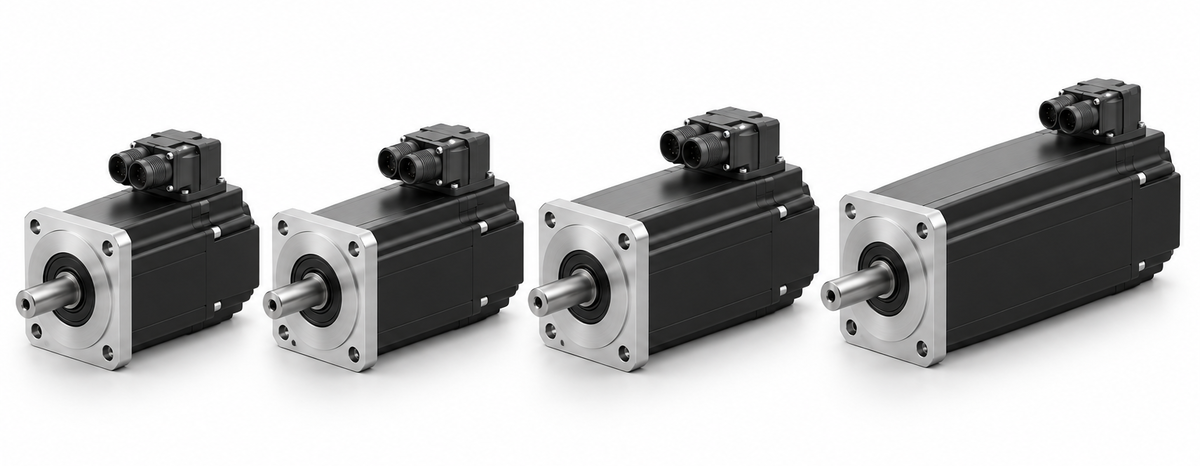
Image: ©Kendrion, AI modified
Modular servo motor platforms enable motor manufacturers to meet a variety of power and torque requirements using a coordinated modular system. Standardized components and uniform interfaces help reduce the number of variants, minimize development effort, and lower costs. Motor size, stack length, and required torque vary depending on the application.
Does this flexibility also apply to the brakes used?
Often, the same brake is used across multiple motor sizes to keep the number of variants and design effort to a minimum. However, what simplifies standardization can lead to oversizing, especially with smaller motors: The brake provides more braking torque than necessary and thus takes up unnecessary installation space, increases weight, and incurs additional costs.
How can the appropriate braking torque be achieved for each motor size without increasing the variety of variants and the complexity of the motor platform?
The right braking torque for every motor size
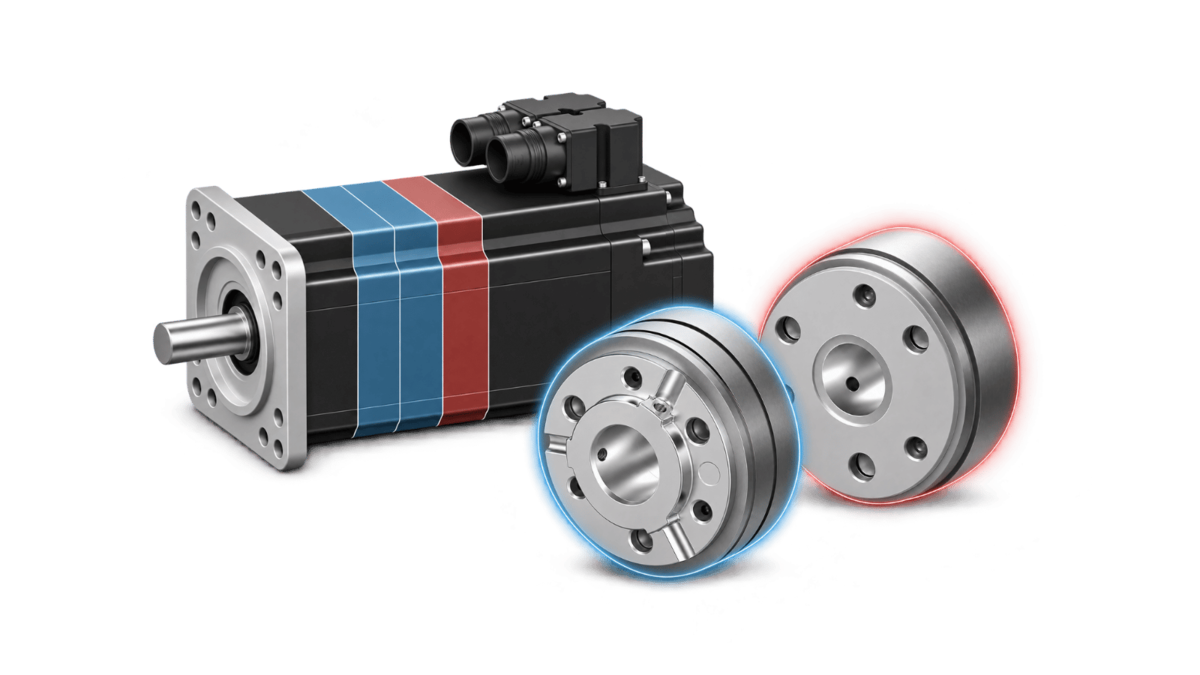
Image: ©Kendrion, AI modified
Not every motor size requires the same braking performance. A tiered braking platform allows for the targeted fulfillment of different torque requirements. This enables servo motor manufacturers to equip each size with a brake tailored to its needs while simultaneously optimizing installation space, weight, and costs. This avoids unnecessary oversizing and promotes an economical brake selection for the entire servo motor series.
Kendrion offers two matching permanent magnet brake series for this purpose:
Slim PM Line: The torque of the Slim PM Line permanent magnet brake is perfectly tailored to the requirements of low- and mid-torque motors.
Torque range: 2.7 Nm - 17 Nm
High Torque Line: High-torque motors with the highest torque requirements continue to be equipped with the most powerful High Torque Line permanent magnet brake.
Torque range: 0.1 Nm - 280 Nm
One interface. More possibilities for your motor platform.
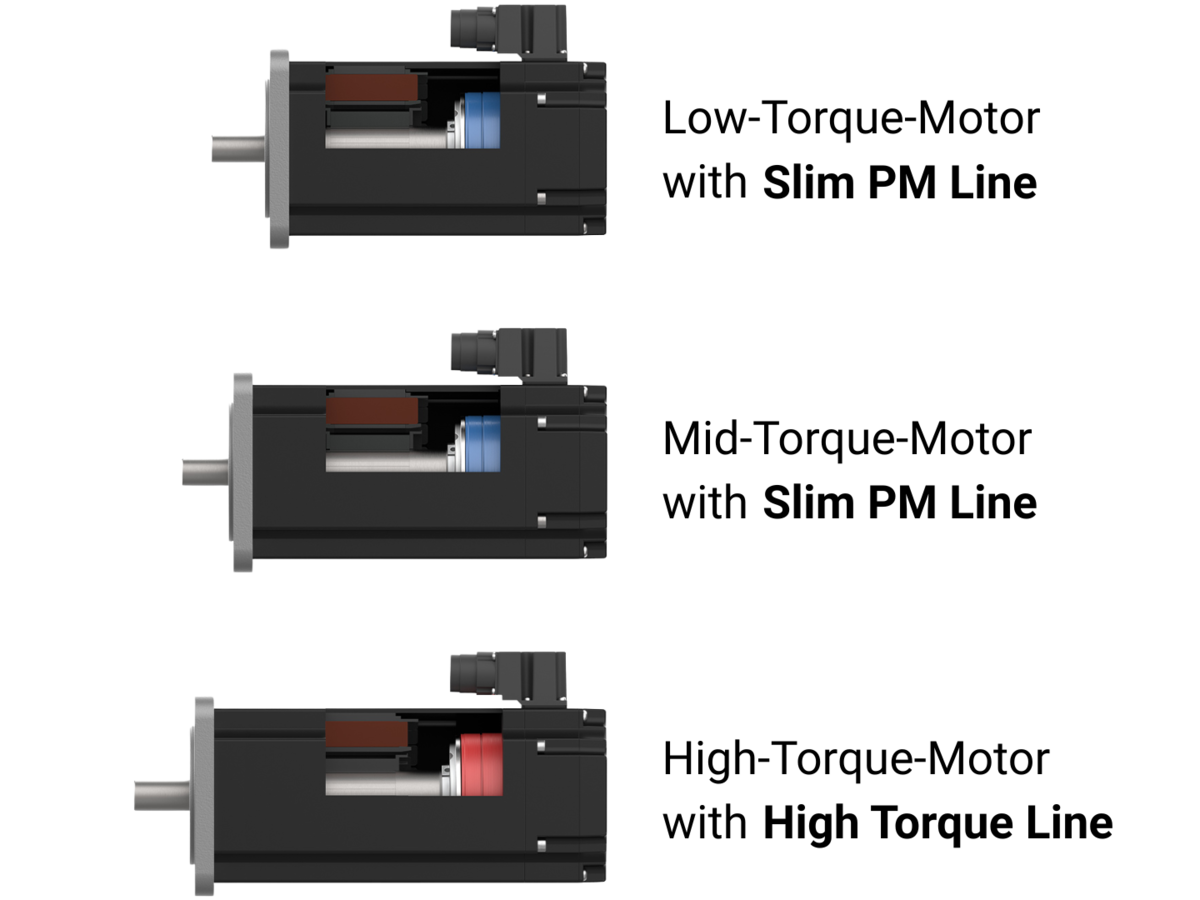
The Slim PM Line complements the High Torque Line to form a coordinated brake portfolio for a variety of torque requirements. Both series feature identical mechanical interfaces, allowing them to be used flexibly within a modular servomotor platform.
Motor manufacturers can thus select the appropriate brake for each motor size without having to redesign the mechanical connection. This reduces integration effort and enables a cost-effective design of the entire motor platform.
The Benefits at a Glance
- Uniform mechanical interface
- Different brakes with the same mechanical connection.
- Demand-based sizing
- Appropriate braking torques for different motor sizes and requirements.
- Cost-effective motor platform
- Less unnecessary installation space, weight, and costs for smaller motor sizes.




What does "Stack" mean in servo motors?
What does "Stack" mean in servo motors?
In many servo motor series, the flange size remains the same while the motor length varies. These different performance levels are referred to as stacks. A higher stack means a longer motor housing, higher torque, and therefore a higher required braking torque.
Typical classification:
Stack 1: short design, lower torque
Stack 2: medium design, medium torque
Stack 3: long design, high torque
Most motor series use three stacks, but some manufacturers offer models with up to six stacks to cover even higher performance ranges.
Which brake is suitable for which stack in servo motors?
Which brake is suitable for which stack in servo motors?
Stack 1–2: Slim PM
The Slim PM series is designed for the performance range typically covered by Stack-1 and especially Stack-2 servo motors.
It delivers more torque in a smaller installation space, making it ideal when standard brakes become limiting but motor length must remain compact.
Stack 3 and above: High Torque
For Stack-3 motors, which generate significantly higher torque, the High Torque PM brake is the most suitable choice.
It provides the highest holding torque within the PM product family and ensures reliable performance for larger motors and axes with high inertia loads.

Meet us at Hall 4, Booth 418!